Mission-Driven Reel Progressions: How Tiered Challenges Reshape Bonus Access and Win Patterns
Written by Bianca Roth · Nov 14, 2026
Mission-Driven Reel Progressions: How Tiered Challenges Reshape Bonus Access and Win Patterns
Slot developers continue to integrate tiered challenge systems that guide players through sequential missions while adjusting how bonus features unlock and how win sequences unfold across multiple spins. These structures organize gameplay around progressive objectives such as collecting specific symbol combinations or completing designated reel patterns within set timeframes or spin counts. Research from the University of Nevada's gaming studies program indicates that such mechanics alter player progression rates by creating intermediate milestones that feed directly into bonus entry points.
Mechanics Behind Tiered Mission Structures
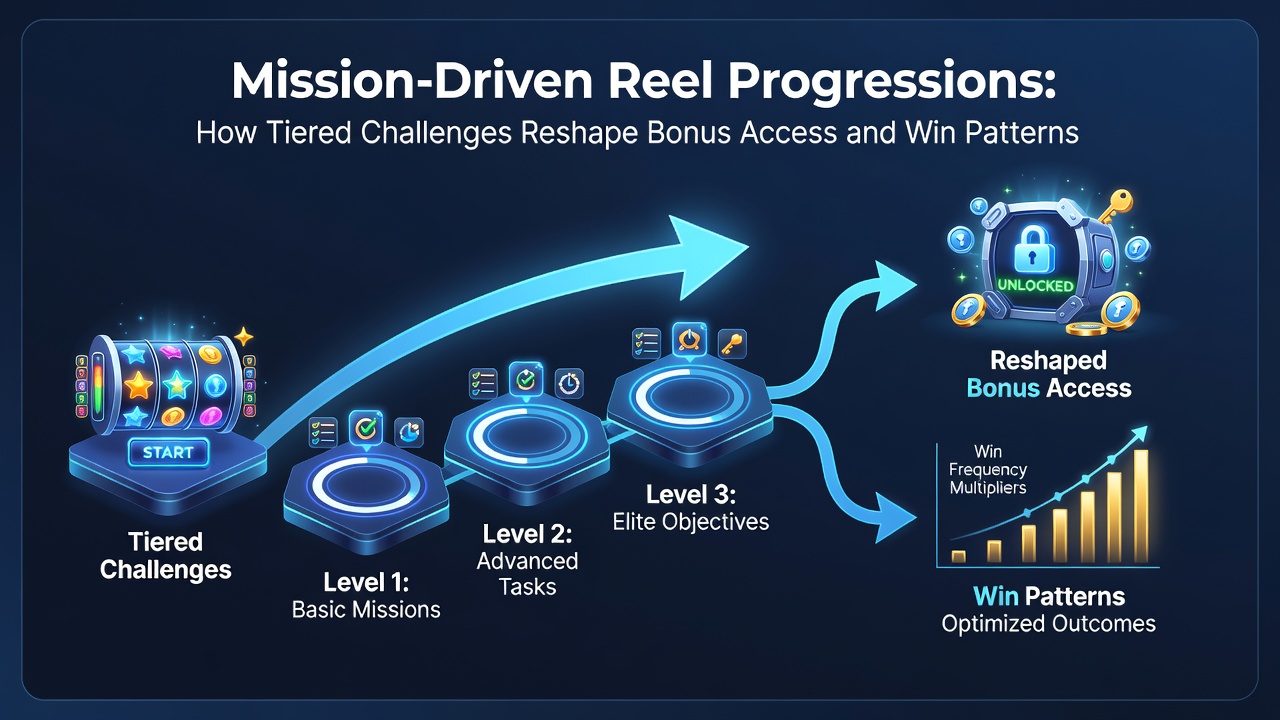
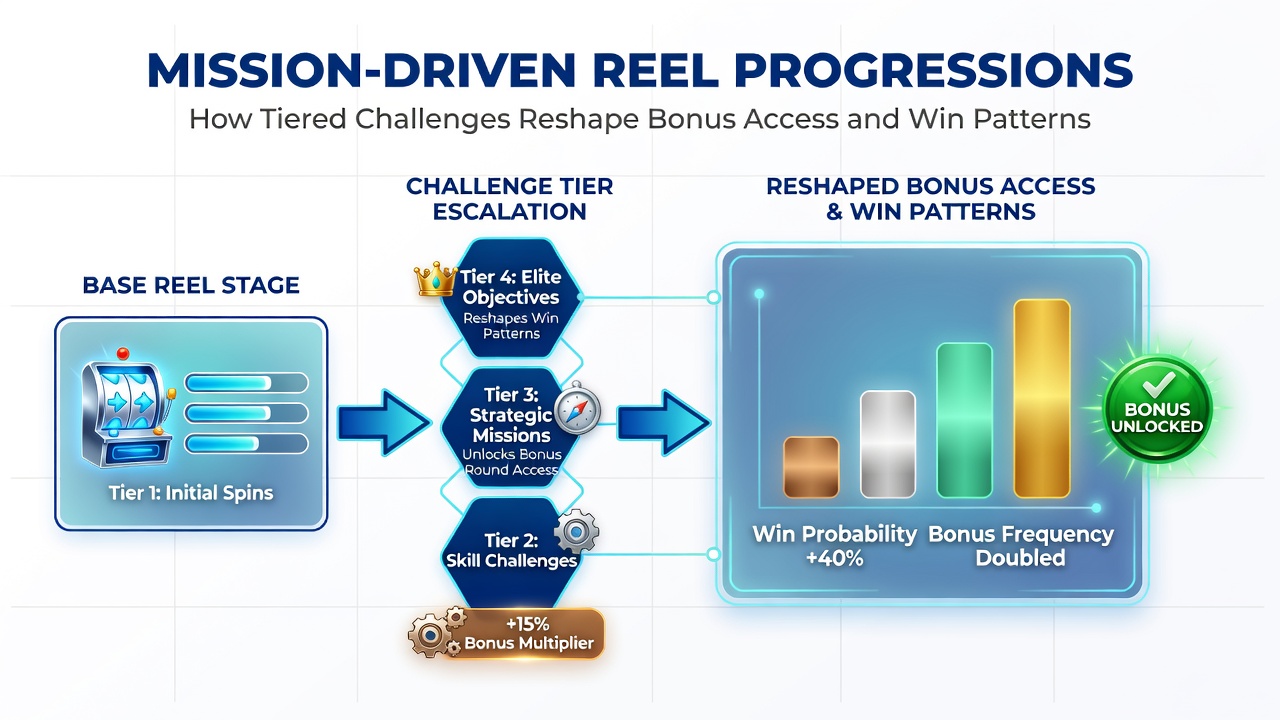
Each tier typically requires players to achieve a defined set of reel outcomes before advancing to the next level where bonus access expands or multiplier values increase. Observers note that these systems often link mission completion to respin triggers or symbol stacking events so that successful progression modifies the reel configuration for subsequent rounds. Data from industry reports shows participation in these layered objectives rises when missions tie directly to hold-and-win sequences or cluster formations rather than operating as isolated side tasks.
Designers arrange challenges so early tiers focus on basic symbol matches while later stages demand more complex interactions like adjacent reel alignments or cascading sequences. This progression changes the frequency of bonus triggers because each completed mission adds new pathways such as additional free spin rounds or enhanced jackpot pools. Figures from the Australian Gambling Research Centre reveal that slots incorporating mission tiers record measurable shifts in session duration as players pursue cumulative rewards across multiple levels.
Impact on Bonus Access Pathways
Tiered challenges reshape entry conditions by replacing traditional scatter-based triggers with mission-driven gates that accumulate value over time. Players advance through objectives that unlock layered bonus stages where each subsequent level offers different feature combinations or increased payout multipliers. Those who've examined these systems point out that bonus availability expands once a player reaches higher tiers because completed missions often carry forward into new sessions or add persistent modifiers to the base game.
November 2026 updates to certain gaming platforms introduced refined tracking for mission completion across mobile and desktop versions which synchronized progress data more precisely between devices. This adjustment allowed players to resume tiered challenges without losing accumulated points and thereby maintained consistent access routes to bonus rounds. According to records from the Nevada Gaming Control Board, platforms that adopted synchronized mission tracking experienced shifts in bonus activation rates during the initial rollout period.
Changes to Win Pattern Distribution
Win sequences adapt when tiered missions influence reel behavior because completed objectives can trigger additional symbol drops or alter volatility settings for limited spin windows. Researchers discovered that missions focused on consecutive wins or specific payout thresholds tend to cluster larger returns toward the end of each tier rather than distributing them evenly across gameplay. Evidence from the Canadian Institute of Gaming Research suggests these patterns emerge because mission rewards often include temporary enhancements to reel speed or symbol frequency that favor extended combination chains.
Yet the overall distribution of smaller wins remains tied to base reel mechanics while larger outcomes concentrate around mission milestones. Players encounter more frequent medium-sized returns during active challenge periods because many systems award incremental credits for partial mission progress. This structure creates a rhythm where win patterns align with objective completion rather than occurring at random intervals independent of player actions.
Regional Implementation Trends
Operators in different jurisdictions apply tiered missions with varying degrees of integration into core gameplay. European platforms often embed challenges within existing bonus buy options so that mission progress reduces the cost of feature purchases at higher tiers. Meanwhile North American markets have tested versions where missions link to loyalty programs that convert completed objectives into redeemable credits or exclusive tournament entries.
What's interesting is how these regional approaches affect data collection because each system logs different metrics around mission completion rates and associated win distributions. A 2025 report issued by the European Gaming and Betting Association documented variations in player retention when missions carried over between game titles versus remaining confined to single slots.
Conclusion
Tiered challenge systems continue to evolve as developers refine how missions connect to bonus triggers and win sequence modifications. The structures establish clear progression routes that reshape access timing and reward distribution without altering underlying random number generation. As platforms incorporate updated tracking features such as those noted in November 2026 deployments, observers expect further adjustments to how these mechanics influence overall gameplay flow across global markets.